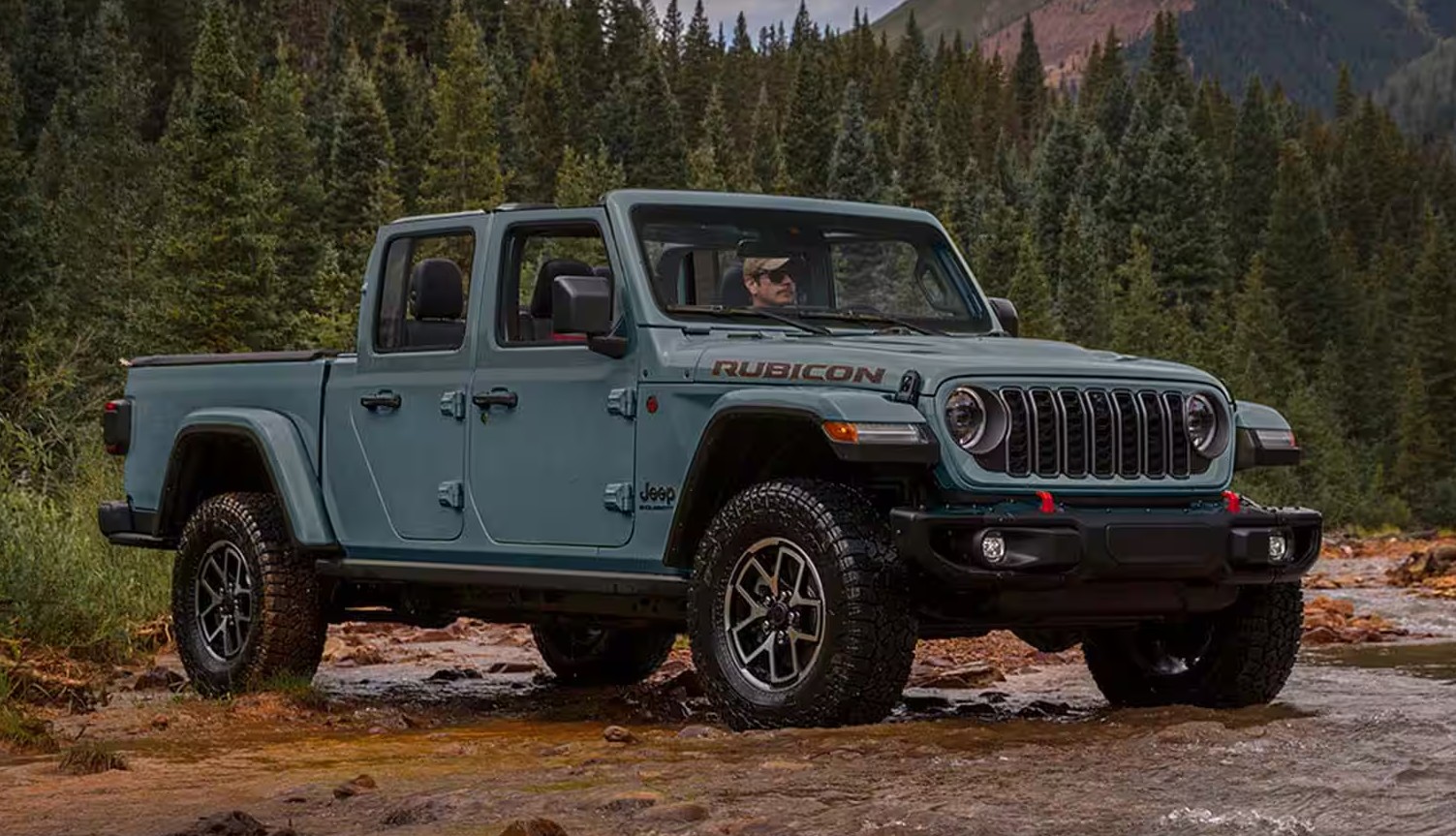
2028 Jeep Gladiator Redesign, Specs, Dimensions – The 2028 Jeep Gladiator could become one of the most significant developments in Jeep’s midsize truck lineup if the company uses the next few model years to modernize the platform without sacrificing the character that made the Gladiator different from every conventional pickup. The current truck combines Wrangler-inspired removable doors and roof panels with a five-foot cargo bed, body-on-frame construction, four-wheel drive, serious trail hardware, and a surprisingly high maximum towing rating. For 2028, the most likely story is not simply another appearance package. It is the possibility of a more comprehensively updated Gladiator with improved technology, stronger powertrain choices, better efficiency, and even more specialized off-road hardware.
The current Gladiator already occupies a rare position in the market. Ford Ranger, Toyota Tacoma, Chevrolet Colorado, and GMC Canyon all offer strong off-road variants, but none provides exactly the same open-air experience as a Jeep pickup. The Gladiator can remove its doors, take off its roof, lower its windshield, and continue functioning as a practical pickup. That combination gives it a lifestyle dimension that conventional midsize trucks cannot easily duplicate. The challenge for a 2028 model will be making that unconventional formula more comfortable and efficient without turning the truck into a conventional crossover-like pickup.
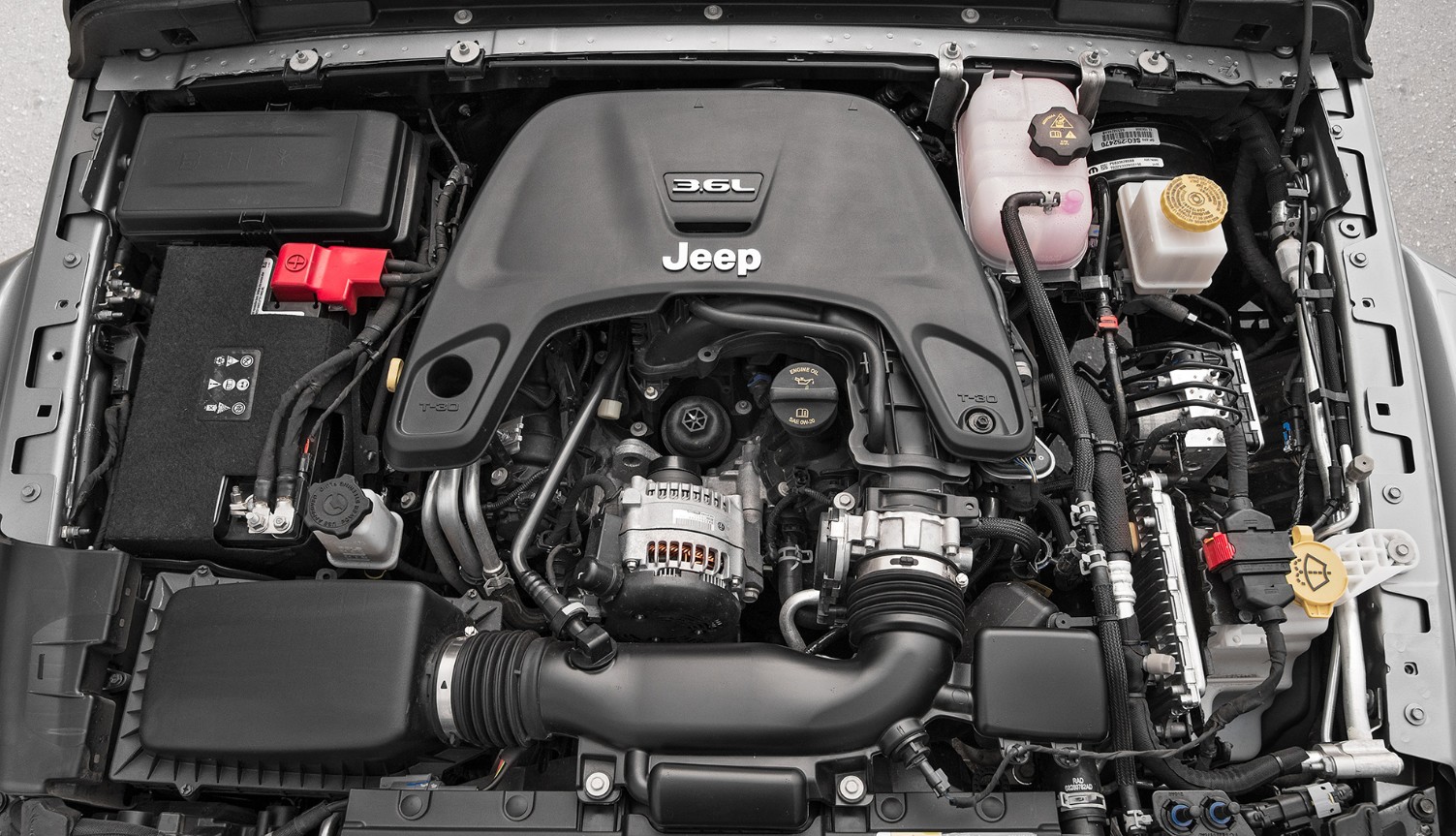
The powertrain question could be even more important than the exterior design. The current 2026 Gladiator uses a 3.6-liter Pentastar V6 producing 285 horsepower and 260 pound-feet of torque, with four-wheel drive and an eight-speed automatic transmission. Jeep also quotes a maximum towing capacity of 7,700 pounds and payload capability reaching 1,720 pounds depending on configuration. Those numbers remain competitive, but the automotive industry is rapidly moving toward turbocharged, hybrid, and electrified powertrains. A future Gladiator could therefore receive a turbocharged engine, hybrid assistance, or another electrified solution, although Jeep has not officially confirmed a specific 2028 powertrain.
For enthusiasts, the key issue is whether modernization can happen without diluting the Gladiator’s mechanical personality. The 2028 truck needs to remain a genuine trail machine rather than becoming another lifestyle pickup with aggressive styling. A better cabin, smarter driver assistance, more efficient propulsion, improved suspension tuning, and stronger connectivity would all make sense. At the same time, low-range gearing, solid off-road geometry, locking differentials on specialist trims, removable body panels, and durable underbody protection should remain fundamental parts of the package. 2028 Jeep Gladiator Redesign
2028 Jeep Gladiator Redesign and Update Plan
Exterior & Interior
The exterior of the 2028 Gladiator should continue to emphasize functional geometry rather than chasing the sleek proportions of mainstream pickups. The upright front end provides strong visibility on trails, while the high ground clearance and short overhangs contribute to the truck’s off-road capability. A redesigned bumper could improve approach clearance while making room for additional sensors and cameras. The grille could become more aerodynamic without losing its seven-slot identity, and LED lighting could be integrated more cleanly into the fenders. Jeep could also offer additional factory wheel and tire combinations, allowing buyers to choose between highway efficiency and aggressive off-road traction.
The cargo bed should remain around the current five-foot class because lengthening it would alter the Gladiator’s proportions and potentially compromise departure geometry. Instead, Jeep could make the existing bed more functional with improved tie-down systems, additional power outlets, integrated lighting, stronger accessory mounting points, and better cargo management. A factory tonneau system could be more tightly integrated with the body, while an optional bed utility package could target camping and overlanding customers. The truck’s open-air character also makes it particularly well suited to recreational equipment such as bicycles, motorcycles, camping gear, recovery equipment, and water-sports accessories.
The most recognizable feature should remain the removable cabin architecture. The current Gladiator offers a level of open-air flexibility unmatched by ordinary midsize pickups, allowing owners to remove the doors and roof and fold the windshield. Jeep also highlights quick-release door hinges and removable components designed around that experience. For 2028, the hardware could become easier and faster to operate, potentially reducing the number of tools or steps required for removal. Better seals, latches, drainage, and insulation could also make the truck quieter when everything is installed without compromising its ability to transform into an open-air machine.
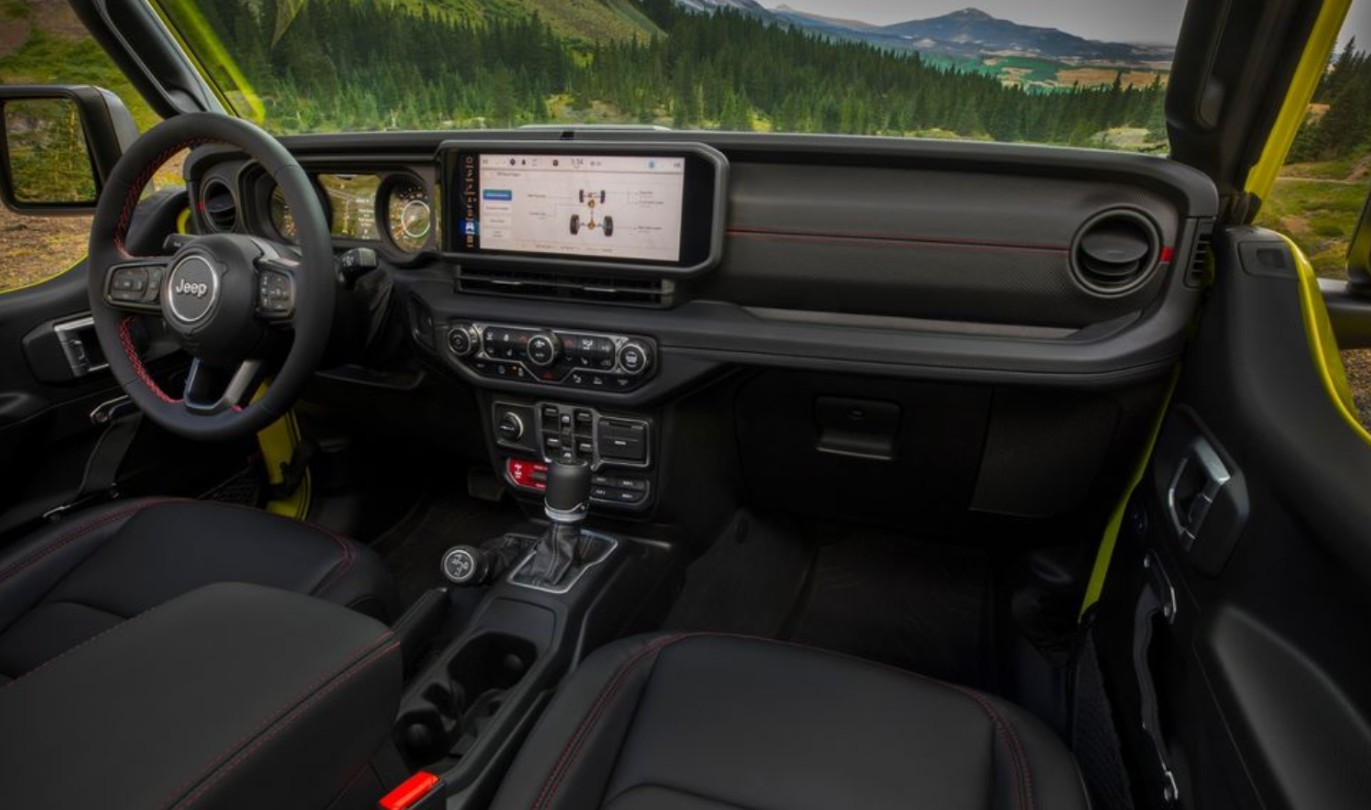
Inside, the biggest opportunity is comfort. The Gladiator already has a functional, upright dashboard with physical switches and a large 12.3-inch touchscreen, and that basic philosophy makes sense for an off-road truck. A future version could improve seat cushioning, materials, storage, climate-control ergonomics, and noise insulation. Heated and power-adjustable seats should become increasingly available across the range, while premium versions could add ventilation, leather or upgraded synthetic upholstery, and a more sophisticated audio system. The goal should be a cabin that works equally well after a six-hour highway drive and a full day on a rocky trail.
The second row also deserves attention. The Gladiator’s rear seats need to serve both passengers and equipment because owners frequently use the truck for weekend adventures. Improved storage behind and beneath the rear seats, additional charging ports, better cupholders, and easier seat-folding mechanisms could increase everyday usefulness. Waterproof or highly durable surfaces would remain desirable because owners may use the truck in muddy, sandy, or wet conditions. Jeep could also expand lockable interior storage to keep valuable equipment secure when the roof and doors are removed.
The 2028 Jeep Gladiator is likely to receive a meaningful evolution of its current design rather than abandoning the recognizable Wrangler-derived formula. The current truck is already distinctive, with a seven-slot grille, round headlights, upright windshield, exposed hinges, removable doors, and a box-shaped rear cargo bed. A future redesign could sharpen these elements with slimmer LED lighting, a revised grille, redesigned bumpers, new wheel patterns, and more aerodynamic details. The basic silhouette should remain immediately recognizable because the Gladiator’s visual connection with the Wrangler is central to its appeal. Any major departure from that formula could weaken one of the truck’s most valuable characteristics.
A more comprehensive update could concentrate on structural refinement. The Gladiator’s body-on-frame architecture is essential for durability and off-road performance, but there is room for improvements in steering precision, ride quality, suspension control, and noise isolation. The current truck can feel unsettled on rough pavement compared with more road-oriented midsize pickups, an unavoidable consequence of its extreme trail capability. A 2028 version could use revised damper calibration, updated bushings, improved steering hardware, and better chassis tuning to make highway driving less tiring while maintaining articulation and wheel control when the road disappears.
Technology is another area where the Gladiator has substantial room to evolve. Current models already feature a 12.3-inch infotainment screen, wireless Apple CarPlay and Android Auto, and available navigation and premium audio. A 2028 truck could introduce faster software, improved voice commands, additional connected services, enhanced trail mapping, and deeper integration between the infotainment system and off-road vehicle controls. A dedicated trail interface could display pitch, roll, steering angle, drivetrain status, tire pressure, altitude, compass information, and other data that matters when driving away from paved roads.
Electrification could become the most important element of the redesign. Jeep has not confirmed that the 2028 Gladiator will be hybrid, plug-in hybrid, or fully electric, so exact battery and motor specifications should not be presented as established facts. However, electrification could solve several challenges at once. Electric motors provide instant torque, which is especially useful for crawling over rocks or climbing steep grades. A hybrid system could also reduce fuel consumption during everyday driving without removing the gasoline engine’s long-distance flexibility. For a truck that spends part of its life on difficult trails and another part commuting on highways, this combination could be particularly attractive. 2028 Jeep Gladiator Redesign
2028 Jeep Gladiator Specs
Engine & Performance
The current 3.6-liter Pentastar V6 provides a useful reference point for the future Gladiator. It produces 285 horsepower and 260 pound-feet of torque and works with an eight-speed automatic transmission. Jeep’s current specifications show 17 mpg city, 22 mpg highway, and 19 mpg combined for the 2026 Gladiator configuration listed on its specifications page. The engine is proven, naturally aspirated, and relatively straightforward, but its fuel economy is not a strong point compared with newer turbocharged or hybrid competitors. That makes powertrain development one of the clearest opportunities for the 2028 model.
A turbocharged four-cylinder or six-cylinder engine could offer a stronger torque curve while reducing displacement. However, the Gladiator needs more than impressive numbers on a specification sheet. Trail driving demands predictable throttle response, controllable low-speed torque, engine braking, cooling capacity, and dependable performance under high loads. A hybrid system could be particularly interesting because an electric motor can deliver smooth torque at very low speeds. That characteristic could make technical rock crawling easier by reducing the need to rev a gasoline engine while providing precise acceleration.
Towing should remain one of the Gladiator’s major selling points. Jeep currently advertises maximum towing capability of 7,700 pounds, although reaching that figure depends on the correct configuration, including axle and equipment choices. The standard specifications page lists a 4,500-pound rating for one base configuration, illustrating why buyers should examine the specific build rather than assume every Gladiator can tow the maximum. For 2028, stronger cooling, revised transmission calibration, improved trailer stability control, and additional camera assistance could be more useful than simply increasing the headline tow rating.
2028 Jeep Gladiator Fuel Economy
Fuel economy will be another crucial area. A future hybrid Gladiator could potentially move beyond the current 19-mpg combined benchmark, while a turbocharged gasoline model might improve highway consumption through a smaller engine and stronger low-rpm torque. Nevertheless, aggressive tires, four-wheel-drive hardware, a tall body, removable roof structures, and off-road suspension all create aerodynamic and rolling-resistance penalties. Even an efficient engine cannot completely eliminate those factors. The most realistic goal would be a meaningful improvement in everyday fuel consumption without compromising trail capability. Any exact 2028 EPA rating remains unknown until Jeep submits the final vehicle for certification.
The specialist off-road models should also remain mechanically differentiated. Rubicon versions are traditionally oriented toward technical rock crawling, while Mojave models focus more heavily on high-speed desert terrain. Jeep confirms that the current Mojave and Mojave X carry Desert Rated credentials, while the Gladiator’s Trail Rated qualification reflects its broader off-road capability. A future lineup could strengthen this separation with more sophisticated adaptive dampers, improved suspension travel, selectable terrain modes, upgraded axle hardware, and smarter traction management.
2028 Jeep Gladiator Safety Features
The 2028 Gladiator should receive a broader and more sophisticated safety package while maintaining the straightforward controls that make the truck easy to operate off-road. Modern pickup buyers increasingly expect automatic emergency braking, adaptive cruise control, blind-spot monitoring, lane-management assistance, rear cross-traffic detection, and parking sensors. The Gladiator’s removable doors and exposed body structure make sensor placement more complicated than on a conventional pickup, so Jeep will need to integrate these systems carefully without interfering with removable components.
Camera technology could become particularly important. A future Gladiator could offer a high-resolution surround-view system designed not only for parking but also for trail navigation. Front-facing trail cameras are already useful on off-road vehicles because they allow the driver to see obstacles hidden behind the hood. A 2028 system could improve image quality, add multiple selectable views, provide dynamic tire-path overlays, and integrate camera feeds with terrain information. This would be valuable when negotiating rocks, steep ledges, narrow trails, or deep ruts where a small mistake can cause expensive damage.
Adaptive cruise control and highway assistance could also make the Gladiator more comfortable as a daily driver. Long-distance highway travel is one area where traditional off-road trucks can feel less refined than their mainstream competitors. Improved lane-centering technology, smoother adaptive cruise operation, traffic-jam assistance, and better driver monitoring could reduce fatigue. These systems should remain assistance technologies rather than autonomous driving replacements, particularly because the Gladiator’s removable roof and doors create unique environmental and sensor considerations.
Trailer-related safety technology should receive similar attention. With a maximum towing rating reaching 7,700 pounds in properly configured current models, many Gladiator owners use the truck to haul boats, trailers, recreational vehicles, or equipment. A future system could provide trailer-specific blind-spot monitoring, hitch-alignment guidance, trailer light diagnostics, tire-pressure monitoring, and a configurable camera view showing the trailer behind the truck. Better electronic trailer stability control would also improve confidence when towing at highway speeds. 2028 Jeep Gladiator Redesign
2028 Jeep Gladiator Release Date & Price
The 2028 Gladiator lineup will likely continue to offer a broad selection because the truck attracts very different buyers. Some customers want a relatively affordable four-wheel-drive pickup, while others are willing to pay significantly more for Rubicon or Mojave hardware. Current 2026 pricing demonstrates how broad the range has become, starting at $39,820 for the Sport and extending beyond $61,000 for Rubicon X and Mojave X configurations. Jeep also offers special editions such as the 85th Anniversary Edition, Willys 41, Rewind, and Shadow Ops.
For 2028, the entry-level Gladiator could move into the low-$40,000 range if inflation and additional equipment continue to push prices upward. A Sport or Sport S would remain the logical choice for buyers who want the Gladiator concept without paying for every premium off-road component. Willys could occupy the middle ground with stronger trail equipment and visual upgrades, while Sahara could emphasize comfort and lifestyle use. Rubicon and Mojave should continue serving highly specialized customers, with Rubicon prioritizing rock crawling and Mojave concentrating on high-speed desert terrain.
The upper trims could become substantially more expensive if Jeep introduces more advanced suspension systems, premium cabin equipment, larger wheels, upgraded driver assistance, or electrified powertrains. A 2028 Rubicon X or Mojave X could reasonably approach or exceed $65,000 before destination and options. If a hybrid or plug-in hybrid version appears, its additional battery and motor hardware could push pricing higher still. These figures remain projections rather than official MSRPs, because Jeep has not announced a 2028 Gladiator price structure.
The release date is also unconfirmed. The most reasonable expectation is that a 2028 Gladiator would begin appearing during the 2027 calendar year if Jeep follows the conventional model-year cycle. However, the exact timing depends on production planning, powertrain development, and whether the truck receives a major redesign or simply another model-year update. Jeep is already showing a preproduction 2027 Gladiator Sarge as a late-summer 2026 arrival, demonstrating that special editions and model-year variations can be introduced separately from a larger product change.
Conclusion
The 2028 Jeep Gladiator has an unusually strong foundation because its appeal comes from something competitors cannot easily reproduce: a genuine Jeep convertible-style experience combined with a useful pickup bed and serious four-wheel-drive capability. The current truck already offers removable doors and roof panels, a fold-down windshield, substantial towing capacity, and specialized Rubicon and Mojave variants. The next generation does not need to abandon those characteristics. It needs to make them easier and more comfortable to live with.
The biggest opportunity is powertrain development. The current 3.6-liter V6 remains capable, but its fuel economy leaves room for improvement. Turbocharging or hybrid assistance could provide stronger low-speed torque and better everyday efficiency while preserving the performance needed for towing and off-road driving. Electrification could also make technical trail driving smoother by delivering precise torque at very low speeds.
Inside the cabin, improvements should focus on usability rather than screen size alone. Better seats, quieter highway operation, stronger storage solutions, more sophisticated trail displays, faster infotainment, and advanced camera systems would make the Gladiator considerably easier to use every day. Those changes would address some of the compromises inherent in a highly specialized off-road pickup without compromising its character.
The ideal 2028 Gladiator would therefore be an evolution, not a reinvention. It should remain visibly and mechanically different from conventional midsize trucks while becoming more efficient, more comfortable, safer, and technologically advanced. If Jeep can achieve that balance, the Gladiator could remain one of the most distinctive adventure pickups on the market well into the next phase of the truck segment.